· Riley Carter
The Best Collapsible Water Bottle for Travel & Hiking
Rigid bottles take up the same space full or empty, which is a problem the moment you are packing a carry-on or hanging weight off a daypack. A collapsible silicone bottle solves it: full-size when you fill it, flat when you do not. Here is how to travel and hike with one, from the airport security line to a day on the trail.
Through airport security, empty
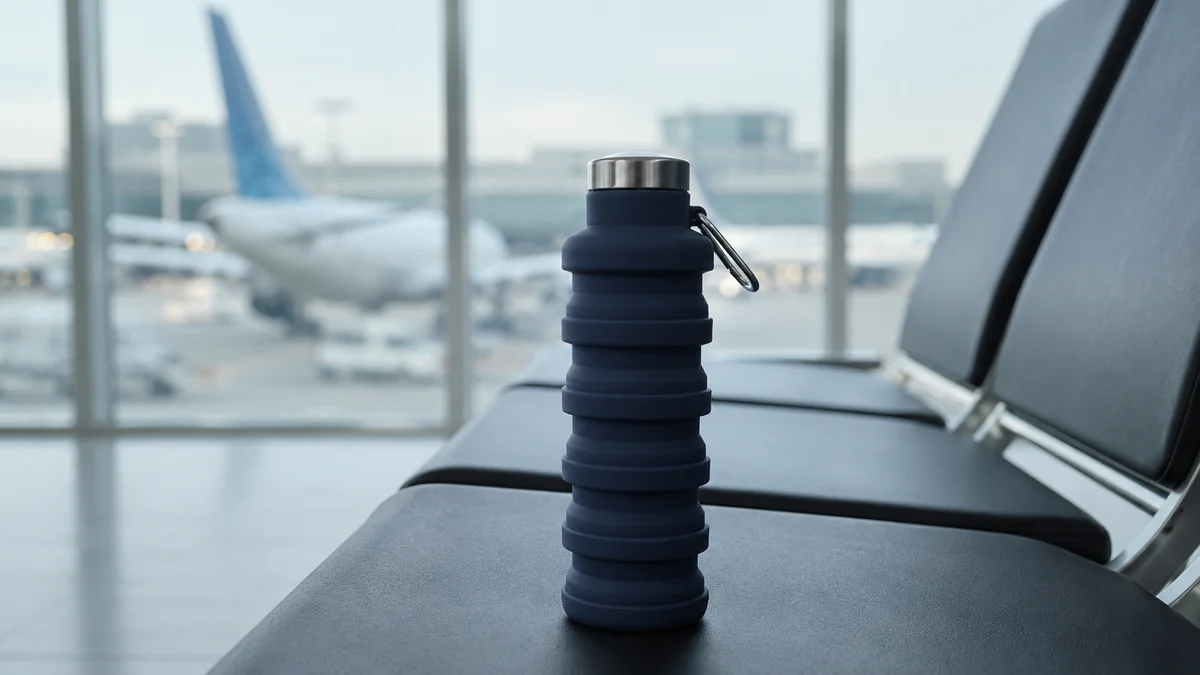
The single biggest reason to travel with a collapsible bottle is the security line. Airport rules limit liquids you carry through, but an empty bottle is not a liquid — it goes through with the rest of your bag. So the routine is simple: drink or dump the last of your water before you reach the checkpoint, send the empty bottle through, and fill it at a fountain or bottle-filling station on the other side. Many airports now have dedicated refill stations right past security precisely because so many travelers do this.
Where a collapsible bottle pulls ahead of a steel one is what happens after you empty it. A rigid bottle is still full-size and rattling in your bag. A collapsible one folds flat and clips away until you find the fountain, so it is not taking up carry-on space during the part of the trip when it is empty anyway. Once you are through, expand it, fill it, and you have free water at the gate instead of paying airport prices for a plastic bottle.
Packing it flat
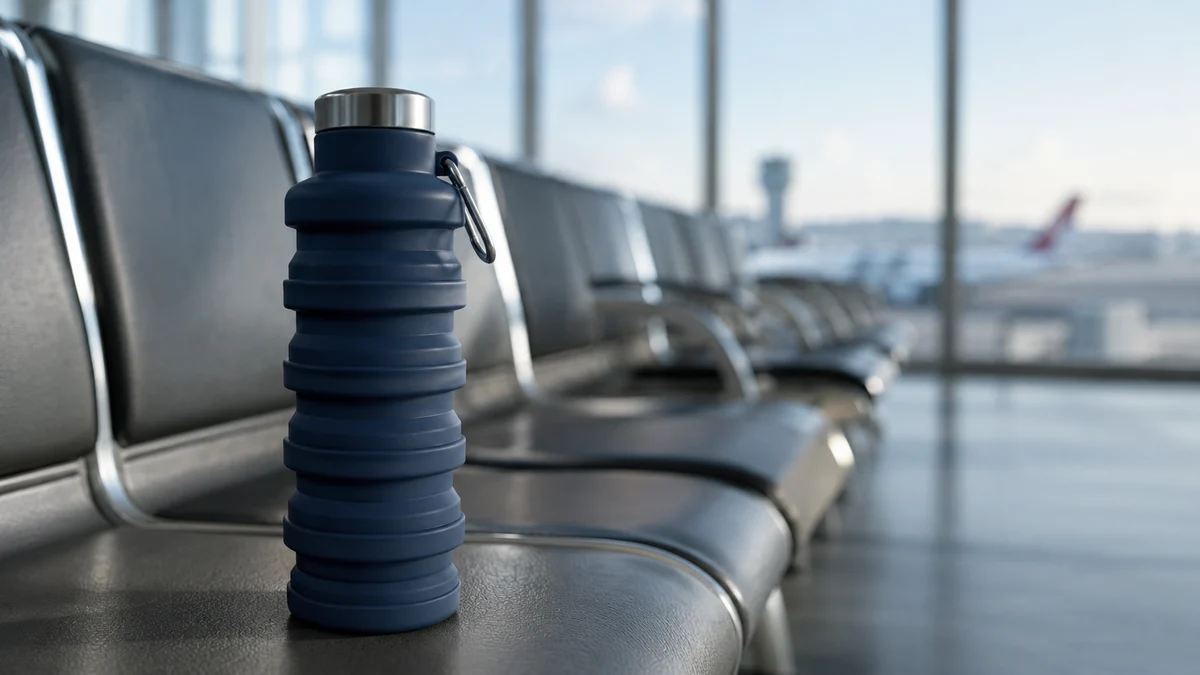
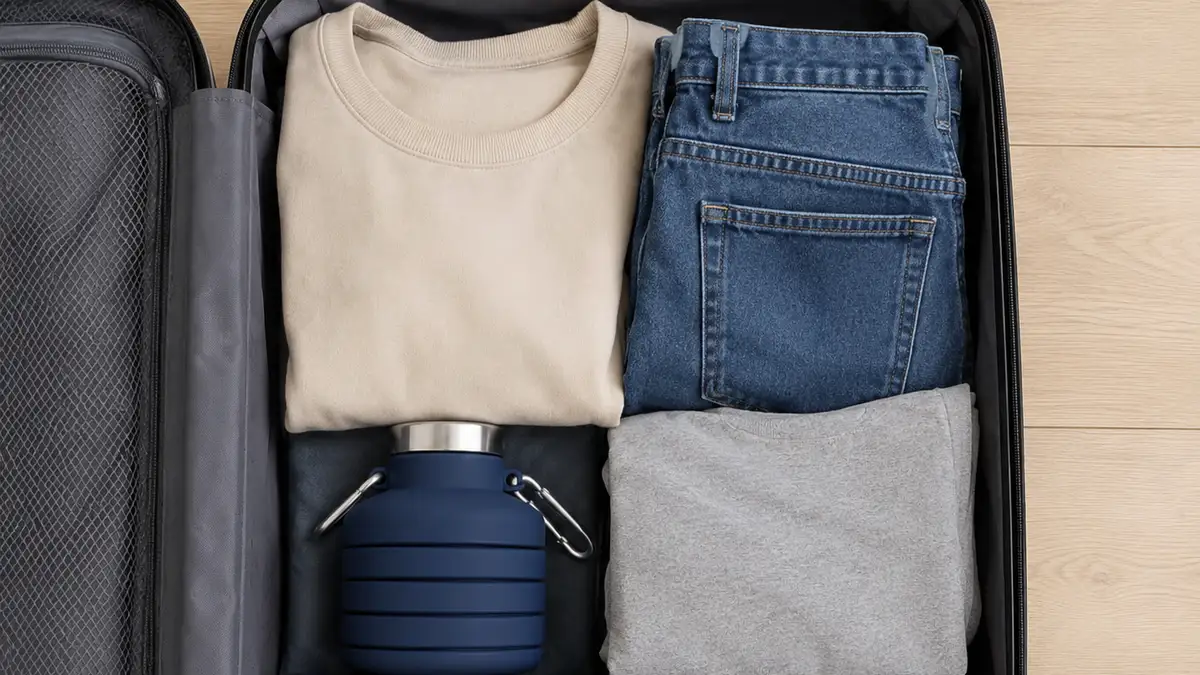
Packing is where the design pays off day to day. When the bottle is empty, collapse the silicone body down its ribs so it locks short, and it flattens into spaces a rigid bottle never fits: a laptop sleeve, a jacket pocket, the slim outer pocket of a carry-on, or the gap alongside your shoes in a duffel. Instead of a bottle-shaped void eating packing volume, you get something close to the footprint of a folded item of clothing.
For a trip, that means you can bring a full-size 17 oz bottle without giving up meaningful space. Pack it collapsed on the way out, expand it once you land, and collapse it again for the flight home. The only habit worth keeping is drying it fully open before you fold it away — a bottle sealed damp in a bag for a travel day is how a smell starts. Dry it the night before you fly.
Clipping it to a daypack
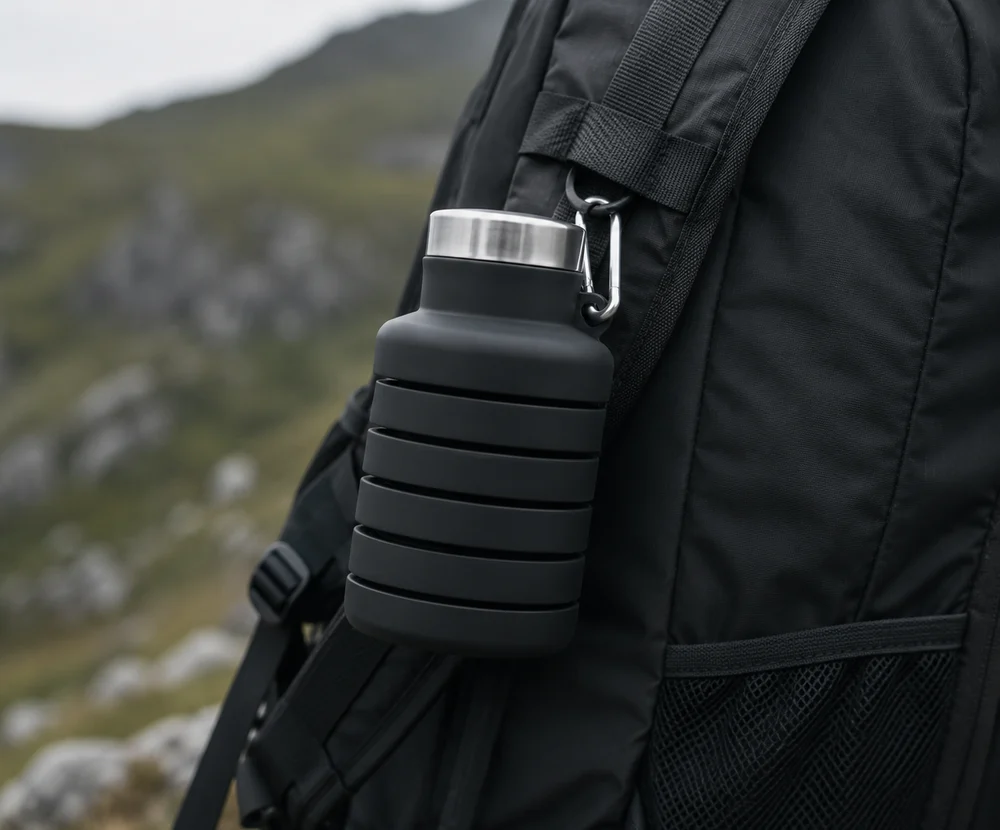
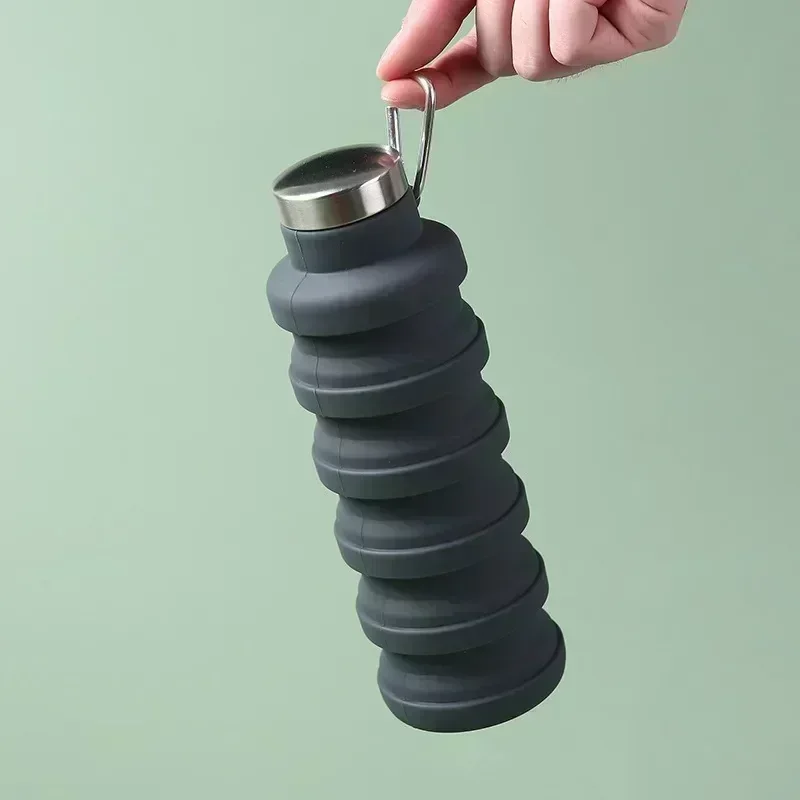
The carabiner is what makes a collapsible bottle a genuine travel and hiking tool rather than just a compact one. Rather than finding interior room in a full daypack, you clip the bottle to a strap, a belt loop, or a gear loop and let it ride on the outside. In a city that means grabbing it one-handed as you walk without opening your bag. On a trail it means the bottle hangs where you can reach it and drink on the move, then clips back without breaking stride.
As the bottle empties over the day, it gets lighter and you can collapse the used portion so it stops swinging. A full rigid bottle bouncing off a hip gets old fast; a collapsible one that shrinks as you drink it does not. The stainless steel screw cap holds the clip and keeps the seal, so even bouncing along the outside of a pack it does not leak into the bag it is riding on.
Refilling on the go
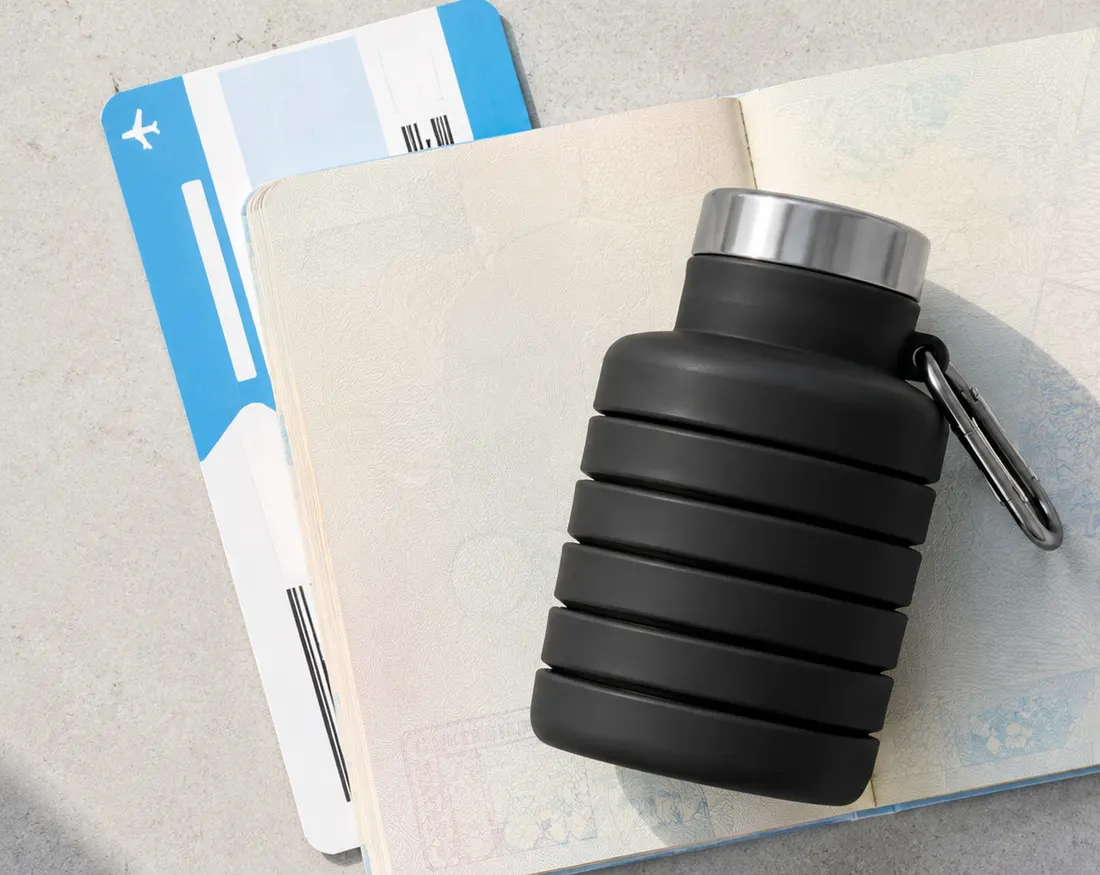
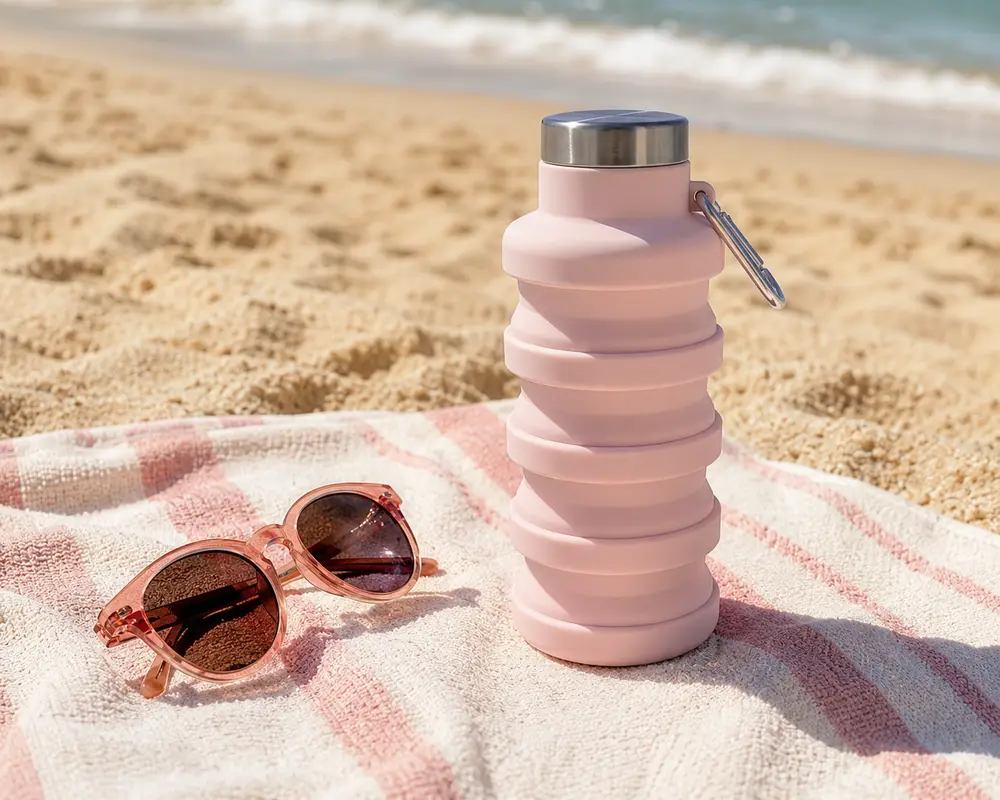
A travel bottle is only as good as your ability to fill it, and this is where carrying your own bottle changes a trip. The plan is to refill often and free rather than carry a heavy day's worth at once. Airports, transit stations, museums, and a growing number of city streets have refill stations and drinking fountains. Cafes and restaurants will usually top up a bottle. In many countries the tap water is perfectly drinkable and free.
Keep a simple rule of thumb: top up whenever you pass a fountain rather than waiting until you are empty. Because the bottle packs down when it is not full, there is no penalty to carrying it around between refills. One note for travel to places where tap water is not safe to drink: a collapsible bottle carries water, it does not purify it, so fill it from a safe source or pair it with whatever filtration or purification you would use anyway.
Capacity for a day hike
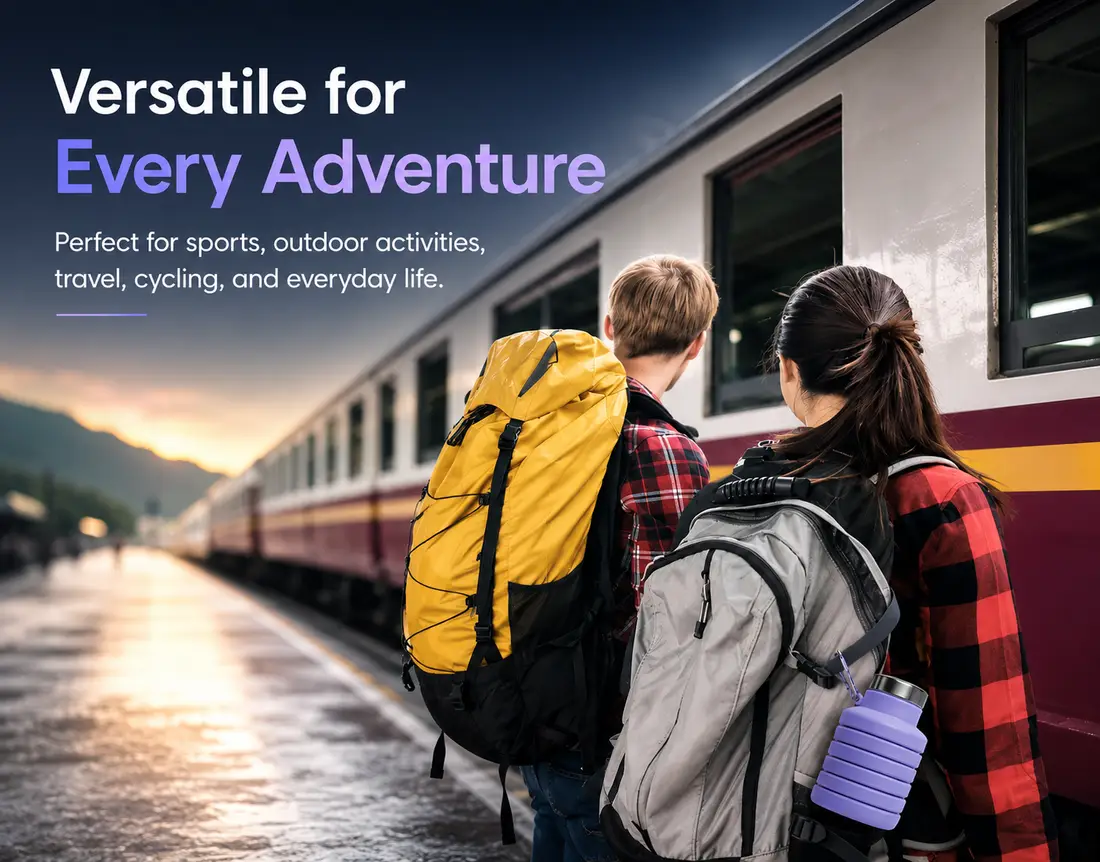
How much water to carry hiking depends on the length of the route, the heat, and where you can refill. For a short local hike, or any route where you pass a reliable water source, a 17 oz (0.5 L) bottle is a comfortable amount to carry and drink between top-ups — enough to matter, light enough that it is not a burden clipped to your pack. Its size and weight are a large part of why it works on a trail.
For a long day with no water for hours, one bottle of any kind is not enough, and that is not a knock on collapsible bottles specifically. The move there is to carry more than one vessel: a collapsible bottle you keep clipped and refill at the trailhead and any source you cross, plus a reservoir or a second bottle for the dry stretch. The advantage of the collapsible one is that when it is empty on the way down, it collapses and gets out of the way instead of riding home full-size and empty.
Why Squishly suits the trip
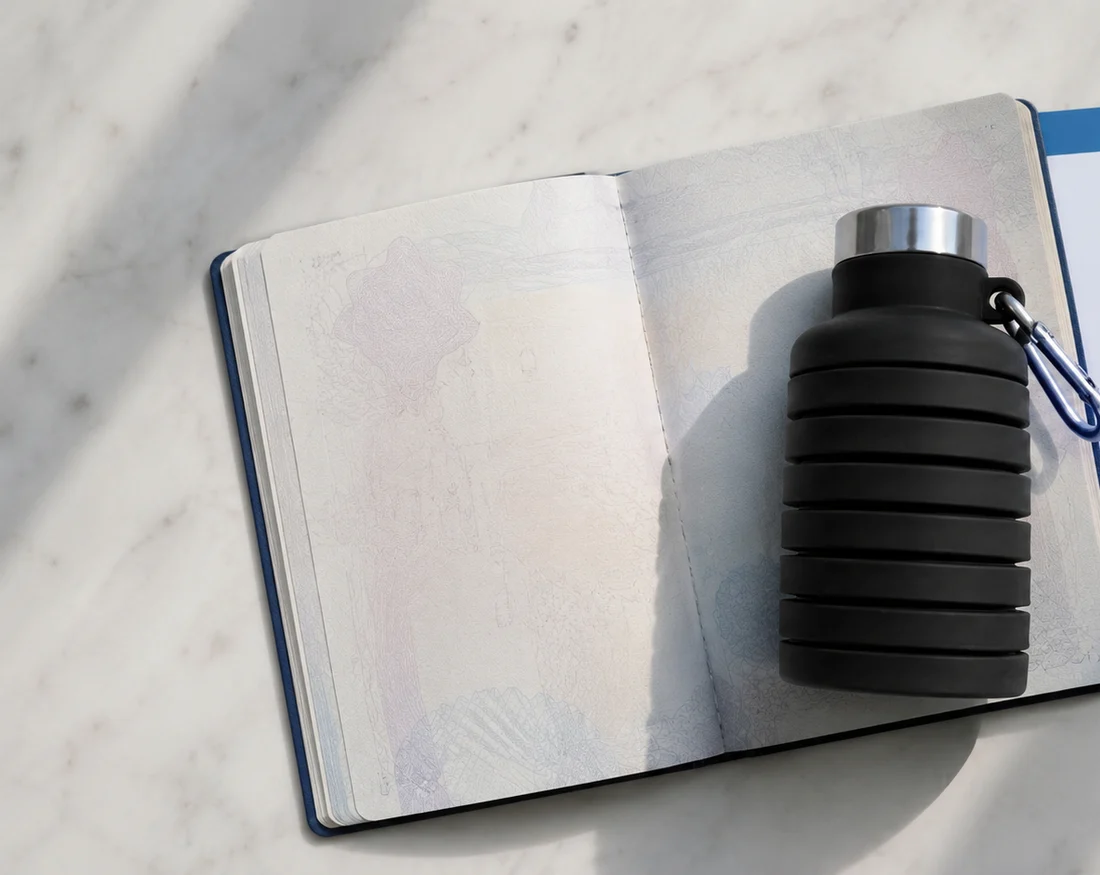
Everything above is why Squishly is built the way it is: a food-grade silicone body that folds flat and locks short, a leak-proof stainless steel screw cap you can trust clipped to a bag, and a carabiner so it clips instead of taking up space. It holds 17 oz, comes in four colors — Slate, Lavender, Blush, and Black — and packs down small enough to forget you are carrying it until you need water.
One bottle is $24.95, and the 2-pack ($39.95) or 3-pack ($49.95) makes sense if more than one person is traveling or you want a spare in every bag. Shipping is free in the US, with a 30-day money-back guarantee, so you can pack it, clip it, and put it through a trip before you decide.