How we test the collapsible water bottle
Before we stand behind a bottle, we live with it. We fill it, carry it, fold it, and drink from it for weeks in normal conditions — not a lab, just the bag, desk and gym routine most people put a bottle through. Here is exactly what we check and why.
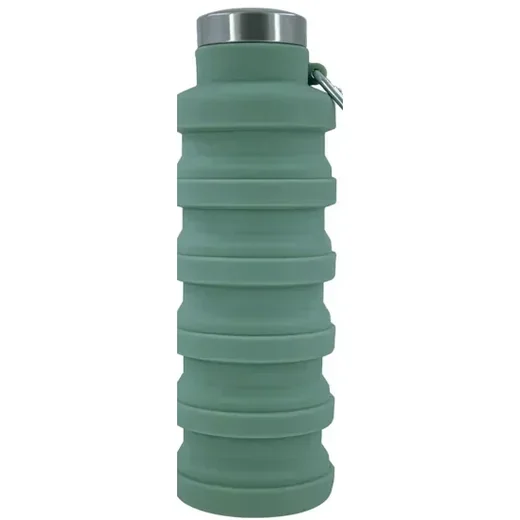
A collapsible bottle looks simple, but the details are where they separate. Two bottles that photograph the same can behave completely differently in a bag: one keeps every drop sealed while it's tipped on its side under a laptop, the other weeps at the cap and leaves a wet patch on your notebook. One drinks clean out of the box; the other carries a rubbery smell for a week. Our job is to catch those gaps before you do, so we use each bottle the way you actually would, for long enough that the weak points show up.
The five things we check
1. Leak test in a loaded bag
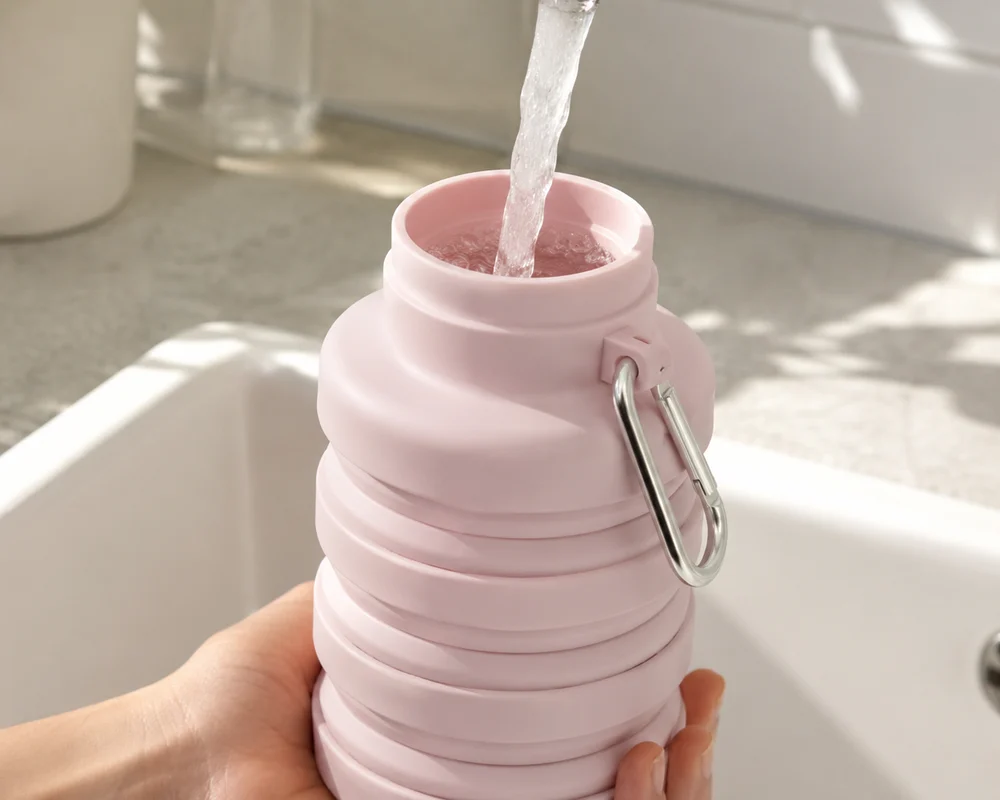
This is the test that matters most, and the one that fails cheap bottles fastest. We fill the bottle to the top, screw the cap down, and lay it on its side inside a packed bag — next to a notebook, a charger and a folded jacket, with real weight pressing on it. Then we carry it around and leave it for hours. A bottle that passes comes out with a dry bag every time. Any moisture at the threads, any damp corner, and we say so. Nobody wants to learn about a leak from a soaked laptop sleeve.
2. Collapse and expand durability
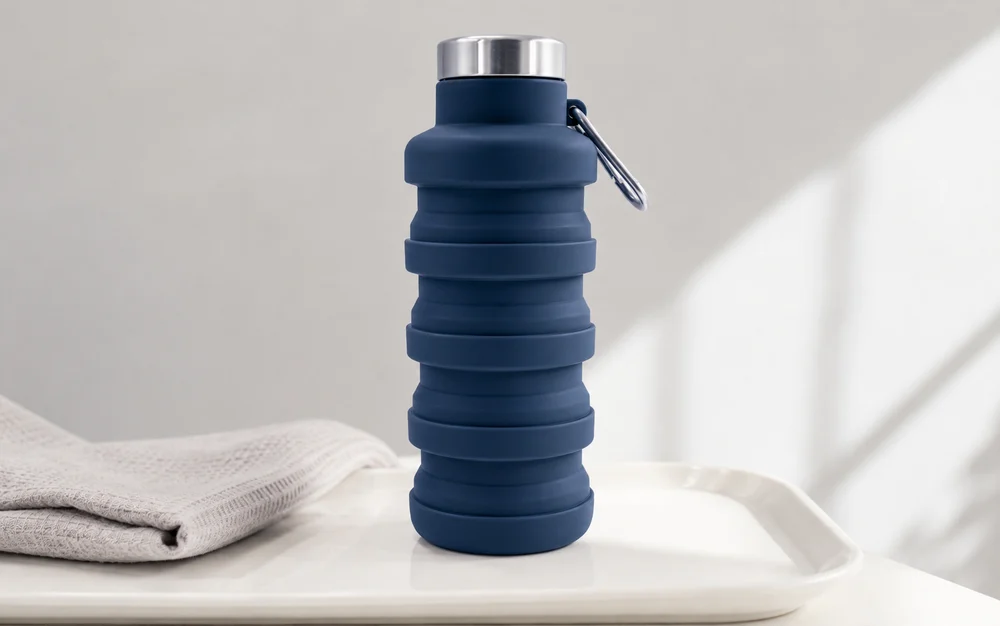
The whole point of the bottle is that it folds down and springs back, so the accordion body and its rings have to survive that motion again and again. We collapse and expand the bottle hundreds of times, watching for the failures that show up on flimsy silicone: a ring that starts to crease permanently, a fold that won't stay down, or a body that loses its shape and no longer stands up when full. A bottle that gets floppy or refuses to hold its collapsed height after a few weeks of this is a bottle we won't recommend.
3. Cap seal
The stainless steel cap is the part standing between your water and everything else in your bag, so we test it on its own terms. We check that the threads bite cleanly, that the cap tightens without cross-threading, and that the gasket seats evenly every time — not just on the first careful twist, but on the quick one-handed twist you'll actually give it. We also flip the full bottle upside down and shake it. A good cap holds; a marginal one shows a bead at the seam, and that's an automatic mark against it.
4. Silicone odor and taste over weeks
Food-grade silicone shouldn't flavor your water, but not all silicone is equal, and a fresh bottle can carry a faint smell out of the packaging. So we don't judge this on day one. We rinse the bottle, use it daily for weeks with plain water, and pay attention to two things: whether there's any rubbery smell at the mouth, and whether the water picks up a taste. A quality bottle is neutral within the first wash or two. One that still smells like silicone after weeks of use doesn't make the cut.
5. Real capacity
A bottle that claims 17 ounces should actually hold close to it once the cap is on and there's room left so it doesn't overflow when you seal it. We measure what really fits in normal use, not the theoretical brim-full number, so the figure on the page matches what you'll pour in on a Monday morning. If a bottle comes up short, we'd rather print the number than repeat a spec sheet.
What a collapsible silicone bottle is designed to do
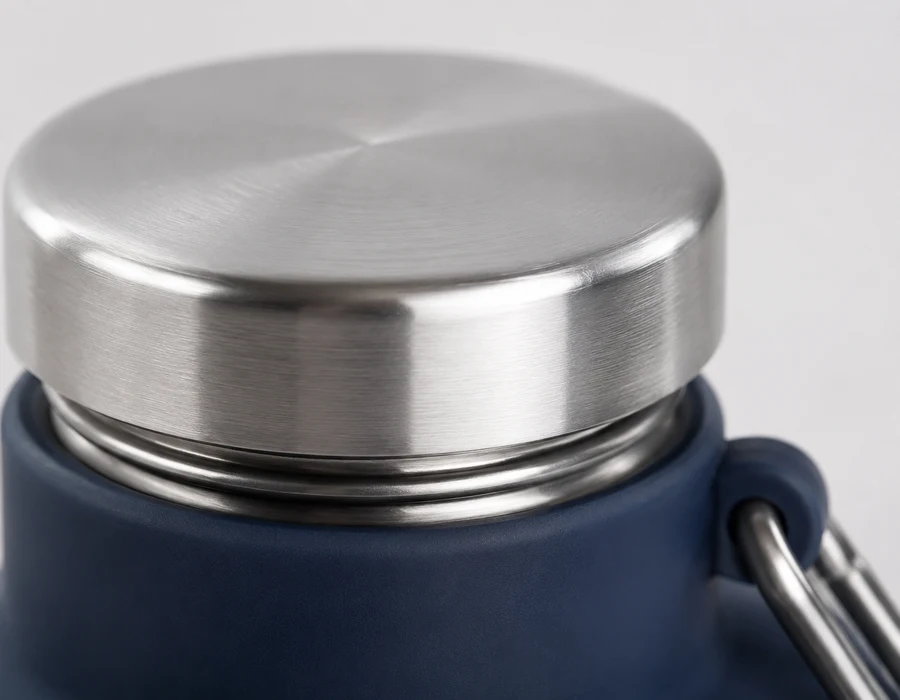
Silicone is chosen for one job, and it does that job better than any rigid material: it folds. Here is what that buys you, and how to get the most out of it.
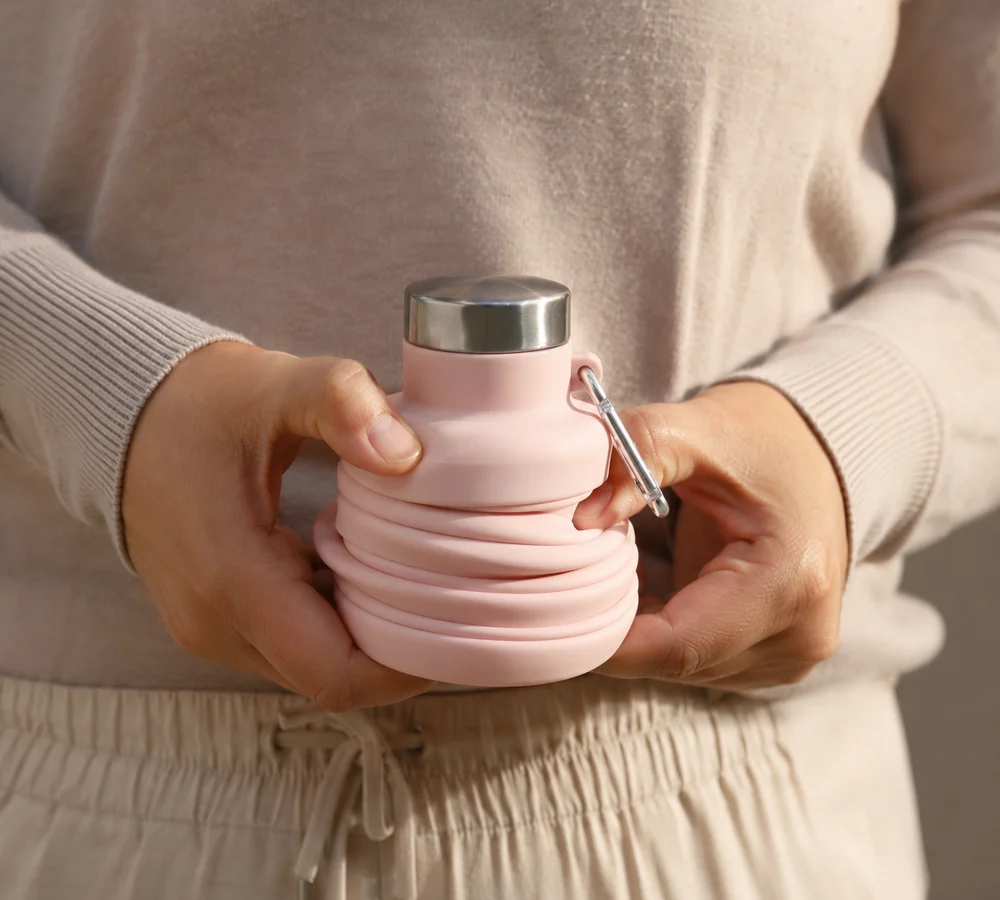
First, the fold. A single-wall silicone body drops from 8.3 inches to 4.5 inches, weighs very little, and clips flat against a bag once it is empty — a shape a rigid wall physically cannot make. It carries water at room temperature the way a steel flask carries it cold, so it is the bottle for a packed rucksack, a carry-on and a desk drawer.
Second, hand-washing keeps it at its best. The mouth is wide, so a hand or a brush goes straight in and the bottle rinses out in seconds. A gentle hand-wash on the silicone body and the cap gasket, followed by drying it open, is what keeps the seal tight and the water tasteless month after month. Our cleaning guide has the full 30-second routine.
Finally, one habit beats any spec: seal the cap firmly and give the full bottle a quick upside-down check before it goes in your bag. That five-second move, more than the material, is what prevents surprises.
What our testing covers
Every rating here is the real average of verified buyer reviews. When a test turns up something worth knowing, it goes straight on the page — like the hand-wash routine above. The reviews on our site come from verified buyers, shown with their own photos, and we leave the four-star ratings up next to the five-star ones: you can read them all on our reviews page. Rather than promise the impossible, we back every order with a 30-day money-back guarantee, so the risk sits with us, not you.